
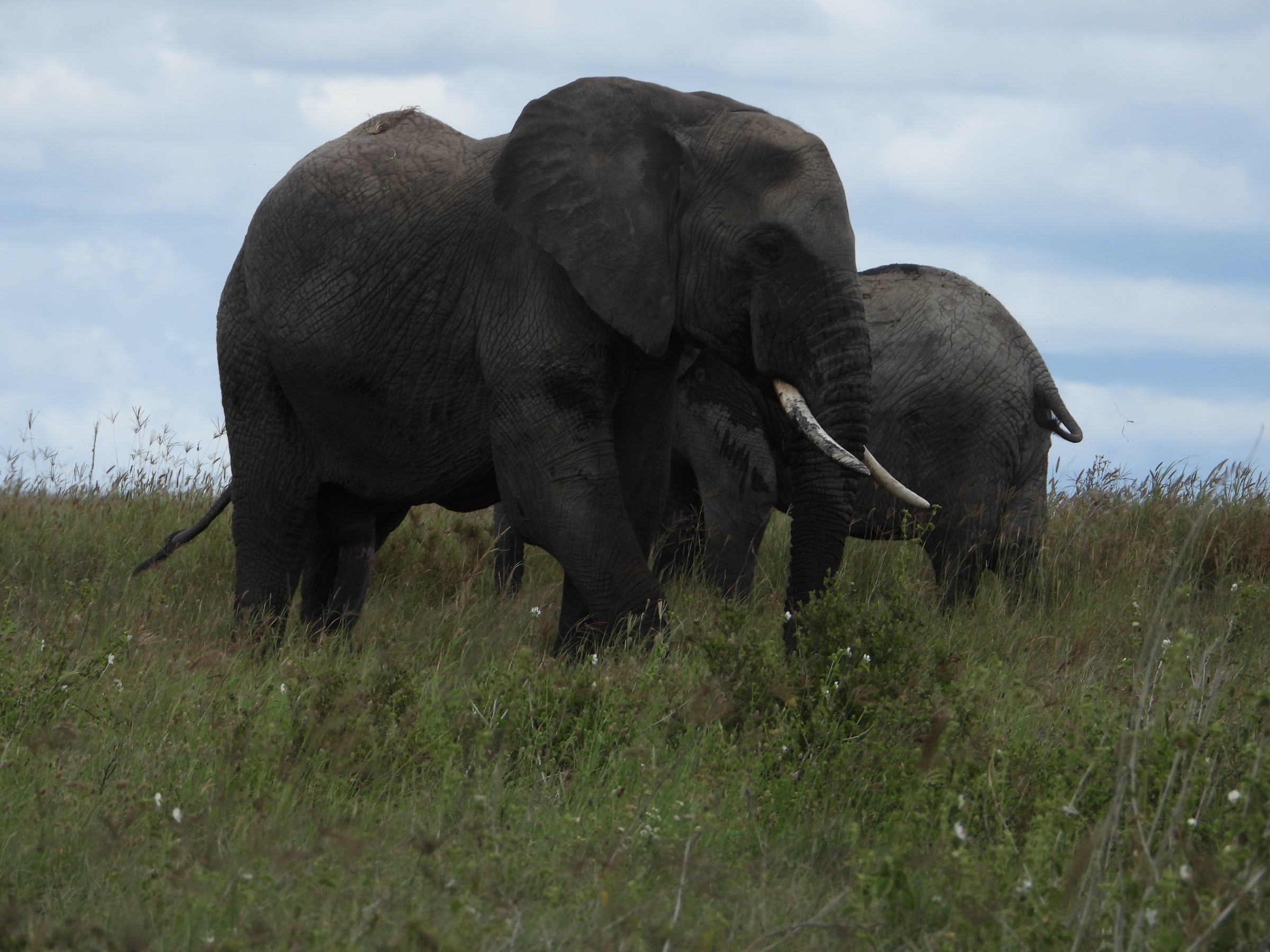
Beyond the safari photograph, a story shaped by memory, farms, and the challenge of sharing land. Why fear exists on both sides, and what is quietly changing.
The elephant is one of Africa's most enduring symbols of intelligence, resilience, and wilderness. Yet beyond the iconic safari sightings lies a far more complicated story. One shaped by memory, survival, and the challenge of sharing space.
Across the landscapes surrounding Tanzania's national parks, from Tarangire and the Serengeti to the Selous ecosystem, elephants and people increasingly find themselves navigating the same land. Their relationship is not defined simply by conflict, but by centuries of coexistence, changing land use, and the lasting effects of both historical trauma and modern pressures.
To understand why human-elephant conflict exists today, we first have to understand the elephant itself.
An animal that remembers
Elephants are renowned for their extraordinary cognitive abilities. They recognise individuals, solve complex problems, communicate over remarkable distances, and possess exceptionally long memories.
Research increasingly suggests that elephants do not simply respond to immediate danger. They learn from experience, remember threatening situations, and alter their behaviour accordingly. Older matriarchs pass knowledge to younger generations, helping entire herds navigate landscapes, locate water, and avoid places associated with danger.
In regions heavily affected by poaching during the 1970s and 1980s, or areas where conflict continues today, these memories may shape how elephants respond to people. What can appear to us as aggression is often better understood as caution, heightened vigilance, or a learned response to repeated negative encounters.
Referring to this as an elephant "grudge" is a human simplification. But it reflects an important truth: elephants remember.
When fear exists on both sides
Human-elephant conflict is rarely driven by malice.
For communities living alongside protected areas, an elephant is not simply an iconic safari animal. It is capable of destroying an entire season's harvest in a single night, damaging homes, breaking water infrastructure, and, in some cases, threatening human life.
For a subsistence farming family, losing a maize field may mean losing the year's food security and household income.
From the elephant's perspective, however, expanding farms, settlements, roads, and fences increasingly interrupt ancient migration routes that have existed for generations. Animals searching for food may unknowingly enter cultivated land, only to encounter shouting, fire, stones, vehicles, or worse.
Fear exists on both sides, and fear has a remarkable ability to reinforce itself.
Why conflict can escalate
When elephants repeatedly experience frightening encounters around farms or villages, they often become more cautious and unpredictable in future interactions.
Likewise, communities that have repeatedly suffered crop losses may understandably respond with increasingly desperate methods to protect their livelihoods.
Historically, this has included firecrackers, burning torches, spears, or poisoning. While born from necessity rather than cruelty, these responses reinforce the elephant's perception that humans represent danger.
The cycle repeats itself.
Animals become more wary. Communities become more defensive. Neither side truly wins.
Conservation is changing
For many years, conservation often focused on separating people and wildlife wherever possible.
Today, many organisations are recognising that lasting conservation depends just as much on supporting people as protecting animals.
Across Tanzania, successful initiatives increasingly involve local communities in conservation decisions while providing practical tools to reduce conflict.
One of the best-known examples is the use of beehive fences. Elephants naturally avoid bees, whose stings around the sensitive trunk and eyes they find particularly unpleasant. By installing connected beehives around farmland, communities create a non-lethal deterrent that protects crops while producing honey as an additional source of income.
Chilli fences offer another effective solution. Strings coated in chilli-infused grease, or smoke made from chilli briquettes, create scents that elephants prefer to avoid, reducing crop raids without causing harm.
Elsewhere, wildlife corridors are being restored to reconnect historic migration routes, allowing elephants to move between ecosystems without crossing farmland. Early-warning systems, GPS tracking, community wildlife scouts, and education programmes all help reduce encounters before they become dangerous.
These approaches recognise something important: coexistence is rarely achieved through barriers alone. It is built through understanding, planning, and partnership.
Changing perceptions
Education has become one of conservation's most powerful tools.
When communities understand elephant behaviour, they are often better equipped to predict movement and respond safely. Equally, visitors who witness elephants on safari gain a deeper appreciation for the complex lives these animals lead beyond national park boundaries.
Rather than seeing elephants simply as gentle giants, or conversely as destructive crop raiders, we begin to recognise them as intelligent, highly social animals responding to the landscapes we collectively shape.
That shift in perspective matters.
A shared future
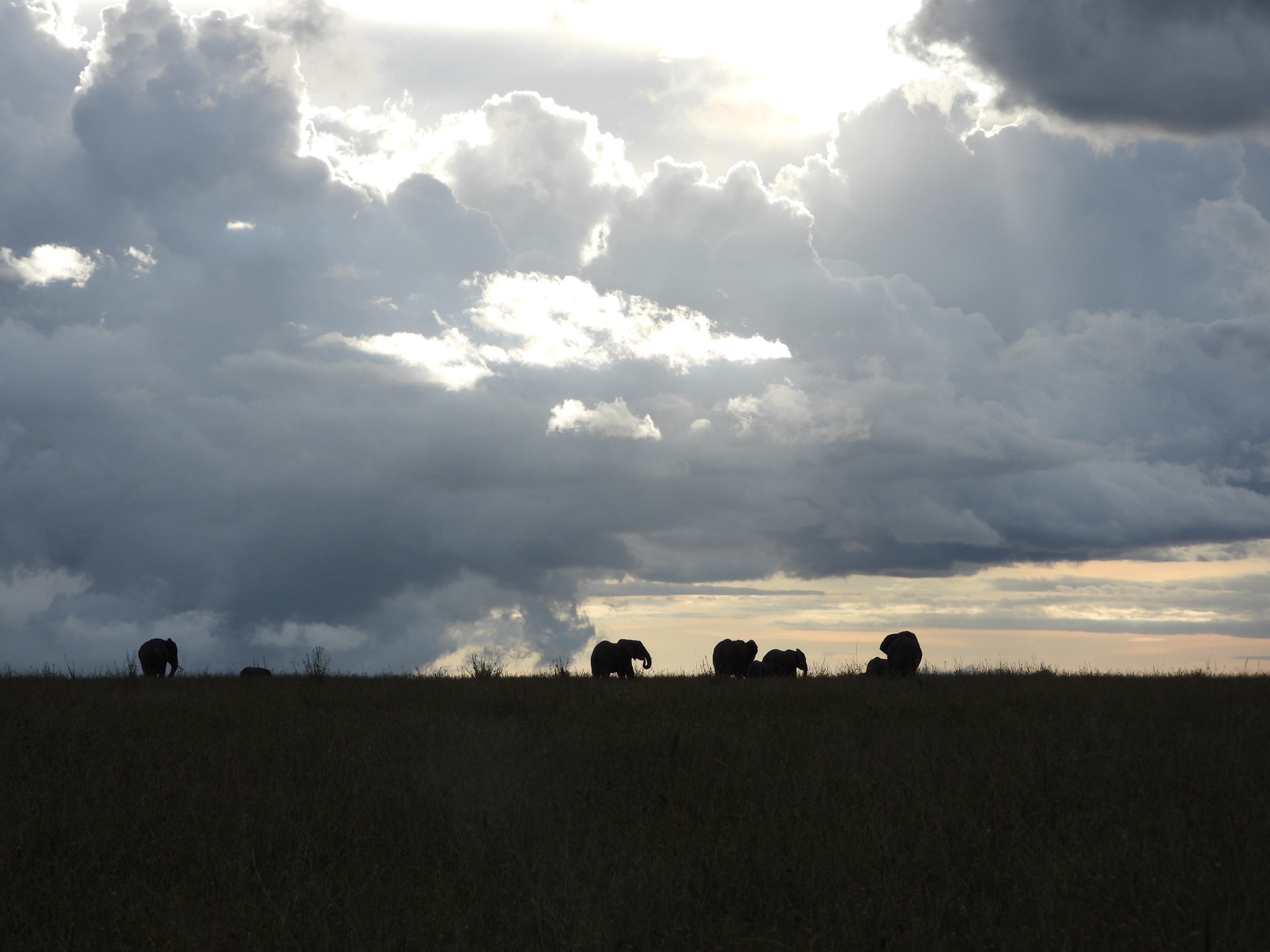
Watching an elephant move silently across the plains, it is easy to imagine wilderness as something untouched by people.
The reality is far more interconnected.
Many of the elephants encountered on safari spend their lives moving between protected areas and community land, navigating roads, farms, villages, and ancient migration routes that have become increasingly fragmented.
Their future depends not only on anti-poaching efforts, but on finding ways for people and elephants to share space successfully.
Perhaps that is the greatest lesson these animals offer us.
Conservation is rarely about choosing between people and wildlife. It is about recognising that the future of one has always depended upon the future of the other.
Only by addressing both human livelihoods and elephant welfare can the landscapes surrounding Tanzania's national parks become places not of conflict, but of coexistence, where one of the world's most intelligent animals continues to roam, and the communities living alongside them continue to thrive.